

The one tool great keynote speakers rely on to truly impact an audience is storytelling. Facts inform, but stories move people — they’re how we relate, remember, and feel. Think about the last movie that stuck with you for days, or the book you were still turning over weeks after you finished it. That’s the power a great speaker taps into when they tell a story instead of just delivering information, and it’s the single biggest reason some talks change how a room thinks while others are forgotten by the parking lot.
So why does story work so well, and how do the best speakers use it? Here’s what separates a speaker who tells a great story from one who simply lists points — and how to spot the difference when you’re booking.
They know the audience
A great story is built for the people hearing it. Top speakers research who’s in the room — their roles, their pressures, their world — and shape their stories so the audience sees themselves in them. The same story told to a room of nurses and a room of sales executives should land differently, and a skilled storyteller adjusts the details, the framing, and the takeaway accordingly.
This is why a speaker’s prep questions matter so much. When a speaker asks thoughtful questions about your audience before the event, it’s usually a sign they’re building stories that will actually connect rather than recycling a one-size-fits-all script.
They tell the story with a purpose
Storytelling for its own sake is just entertainment. The best speakers anchor every story to a point — a lesson, a shift in perspective, a call to action — so the emotion they create actually goes somewhere. The story is the vehicle; the message is the destination.
When you’re evaluating a speaker, listen for that link. Does each story ladder up to a clear idea your audience can act on? A speaker who can connect a personal moment to a practical takeaway is one who’ll leave your audience both moved and changed.
They engage the audience
Great storytellers don’t just perform at a room — they pull it in. They use pacing, questions, humor, and well-placed pauses to keep people leaning forward, turning a passive audience into active participants in the story. That engagement is what makes the message stick long after the applause.
They evoke real emotion
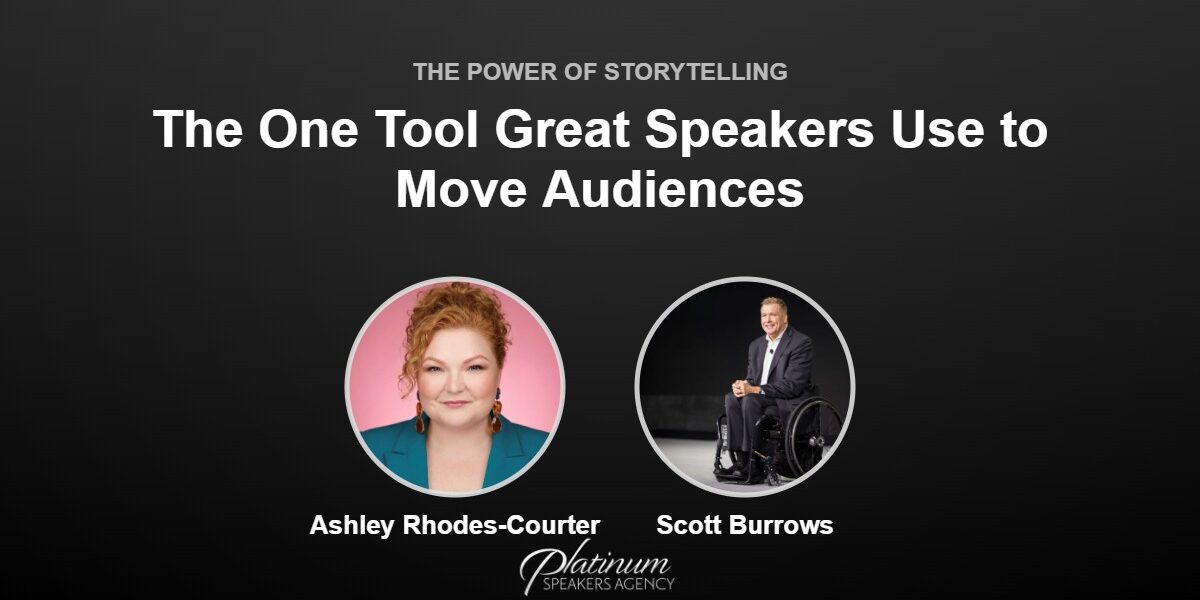
Emotion is what turns information into memory. The speakers who impact audiences most know how to make a room laugh, catch its breath, or feel a lump in its throat — because those are the moments people carry home. A speaker like Ashley Rhodes-Courter, who turned her own extraordinary life story into a bestselling memoir, shows how a well-told personal story can move an audience in a way no slide deck ever could.
How to find a great storyteller
The best way to know whether a speaker can tell a story is simple: watch them do it. Look for real footage in front of a live audience and notice whether the room is with them. Do people lean in? Do they laugh, go quiet, react? A speaker like Scott Burrows — whose “Vision-Mindset-Grit” message grew out of his own story of walking again after being told he never would — is a perfect example of how a lived story becomes an unforgettable keynote.
If watching hours of speaker footage isn’t how you want to spend your week, that’s exactly what we’re here for.
The takeaway
The single tool that separates good speakers from unforgettable ones is storytelling — used with knowledge of the audience, a clear purpose, genuine engagement, and real emotion. When you’re choosing a speaker, look past the credentials to the stories: they’re what your audience will actually remember.
At Platinum Speakers Agency, we know which of our speakers are master storytellers and which stories will land with your particular audience. Tell us about your event and we’ll match you with someone who’ll have your room hanging on every word. Meet our speakers or get in touch to get started.